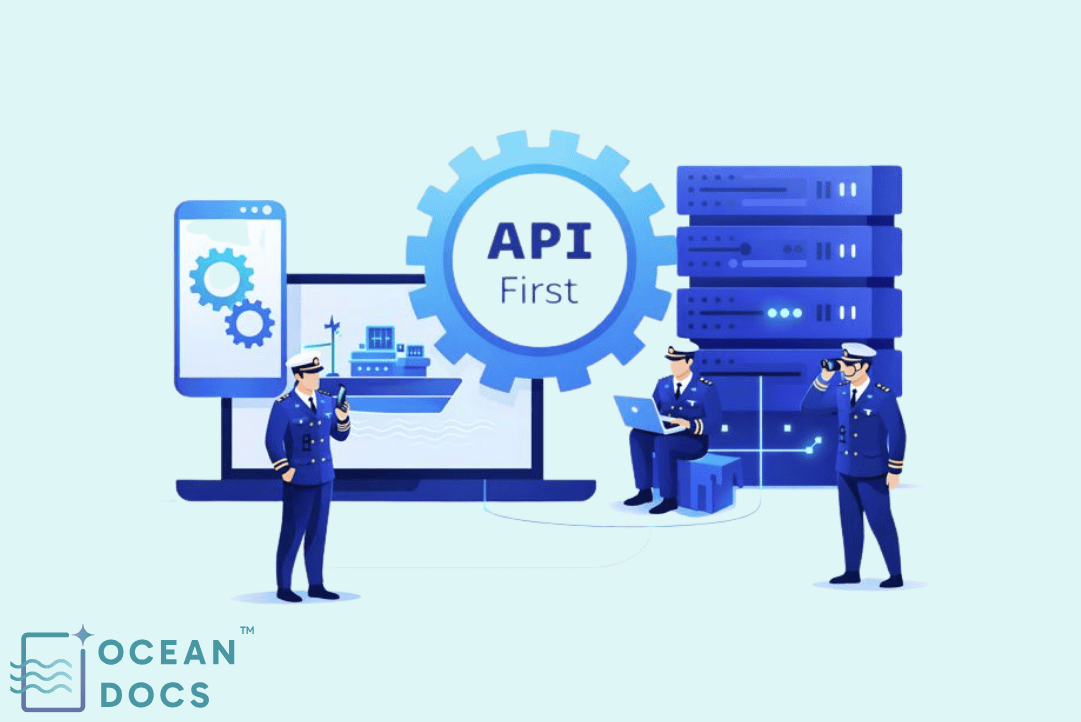
Why Maritime Document Systems Need API-First Design
December 22, 2025 By OceanDocs AI
Maritime operations rely heavily on shipping documents to prove compliance, ensure vessel safety, and support daily marine operations. As fleets grow and regulations tighten, document systems can no longer function as closed tools. API-first design has become essential for modern maritime documentation systems. It allows shipping documentation to move seamlessly across platforms, teams, and stakeholders while supporting compliance, efficiency, and audit readiness.
What API-first design means in maritime systems
API-first design means building a system where integrations are planned before user interfaces. In maritime documentation, this approach allows ship documents to connect easily with fleet management solutions, ship management software, and compliance tools. Instead of exporting files manually, systems exchange data automatically. This creates a connected environment where maritime documentation stays current and accessible across operations.
Why traditional document systems fall short
Many maritime document systems were designed as standalone repositories. They store ship documents but do not communicate well with other systems. This creates silos across fleet management, ship crew management, and technical ship management teams. Manual uploads, duplicate records, and version mismatches become common. These gaps increase the risk of expired or missing shipping documentation during audits, surveys, or Port State Control inspections.
API-first systems remove these barriers by enabling real-time data exchange. Shipping documentation becomes part of operational workflows rather than a separate task.
Supporting maritime compliance through connectivity
Maritime compliance depends on accuracy, consistency, and availability of documentation. API-first design ensures that ship documents linked to SOLAS, MARPOL, ISM Code, ISPS Code, STCW, COLREGs, and other IMO regulations remain synchronized across systems. When a document updates in one platform, the change reflects everywhere it is used.
This connectivity improves shipping compliance and reduces manual checks. Compliance teams gain confidence that records presented during inspections reflect the latest approved versions.
Enabling smarter document intelligence
AI document intelligence works best when systems share data easily. API-first maritime document systems allow AI in maritime to analyze shipping documents across platforms. AI in shipping can track expiry trends, detect missing records, and assess compliance risk using real-time data.
Without APIs, AI-powered maritime operations solutions rely on periodic imports or manual uploads. This limits accuracy and timeliness. API-first design enables continuous monitoring and predictive insights that support proactive compliance.
Improving audit readiness and inspections
Audit readiness depends on having the right documents available at the right time. API-first systems ensure that audit teams, ship managers, and HSEQ teams access the same shipping documentation. This consistency reduces confusion during audits, ship surveys, and marine surveying activities.
Port State Control inspections often require quick retrieval of records. API-enabled systems reduce delays caused by searching across disconnected platforms. This supports smoother inspections and protects operational schedules.
Strengthening survey and vetting workflows
Ship surveys and SIRE vetting rely on structured and accurate documentation. API-first design allows survey platforms and vetting systems to pull required ship documents directly from the source. This eliminates manual preparation and reduces the risk of missing files.
For tanker ship management, where documentation volume is high, APIs play a critical role. They support efficient data sharing and improve readiness for SIRE inspection and other vetting processes.
Enhancing fleet and ship management efficiency
Fleet management solutions depend on reliable data to plan operations. API-first maritime document systems allow fleet ship management teams to align documentation status with operational decisions. Maintenance schedules can reflect certificate expiry. Crew planning can align with STCW documentation requirements.
Ship management software integrated through APIs reduces administrative workload. Technical ship management teams gain real-time visibility into documentation status across vessels. This improves coordination and reduces last-minute interventions.
Supporting scalability and regulatory change
Maritime regulations evolve continuously. API-first systems adapt more easily to change because integrations can update without redesigning the entire platform. New regulatory requirements, reporting formats, or authority systems can connect through APIs.
This scalability is critical for shipping companies operating across regions and Port Authorities. API-first maritime compliance software supports growth without increasing complexity.
Data consistency and security
API-first design improves data consistency by reducing duplicate entries and manual handling. A single source of truth for shipping documentation lowers the risk of errors. Controlled APIs also support secure data sharing with clear access rules.
Security remains a priority in maritime operations. API-first systems can enforce role-based access and logging, which supports audit trails and compliance reporting.
Why API-first matters for long-term maritime transformation
Maritime operations are becoming more digital and data-driven. Connected ecosystems depend on interoperable systems. API-first maritime document systems enable this transformation by linking documentation, compliance, and operations into a unified flow.
AI in maritime amplifies the value of APIs by turning connected data into insights. Predictive compliance, smart documentation, and proactive risk management become possible only when systems communicate effectively.
Conclusion
API-first design is no longer optional for maritime document systems. It is essential for managing shipping documentation at scale, maintaining maritime compliance, and supporting safe marine operations. By enabling interoperability, API-first systems reduce manual work, improve audit readiness, and unlock the full value of AI document intelligence. For shipping companies building future-ready compliance workflows, OceanDocs AI provides AI-powered maritime operations solutions designed around connectivity, intelligence, and control.