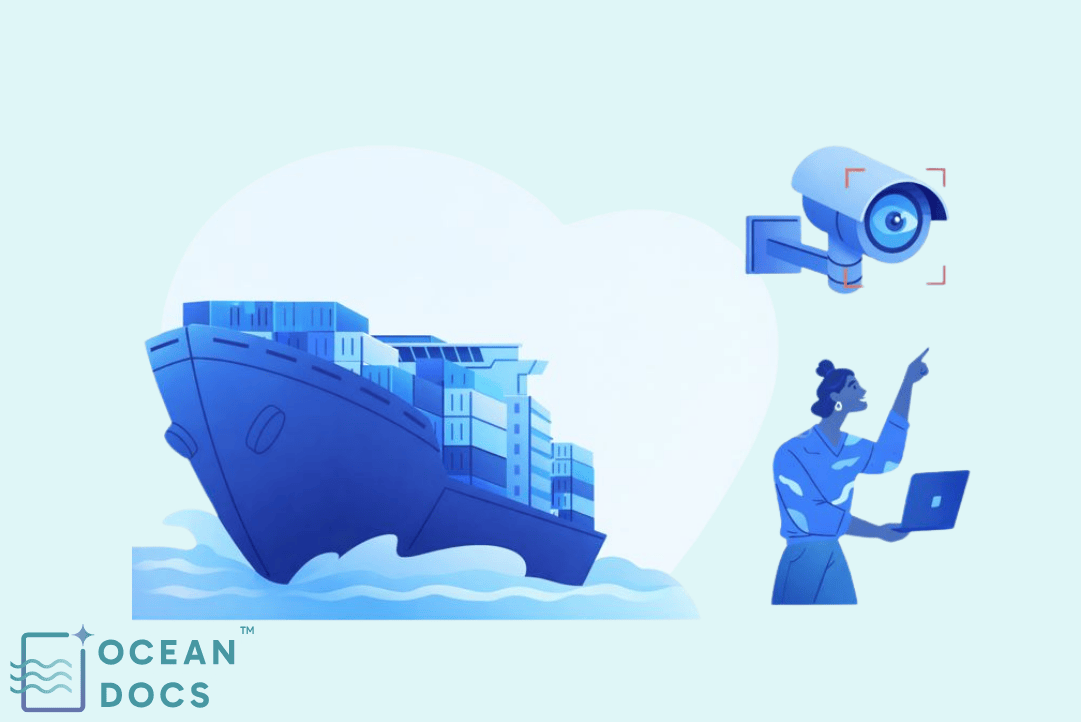
AI Linking Document Updates to Maritime Security Alerts
December 31, 2025 By OceanDocs AI
What happens when a security alert is raised but the crew is still looking for the right document?
In maritime operations, delays like this can increase risk. Ships operate under strict maritime regulations, and security events demand fast and accurate responses. AI now plays a key role by linking document updates directly to maritime security alerts.
Why Documents and Security Alerts Must Work Together
Ships rely on shipping documents and maritime documentation to stay compliant and safe. These ship documents include ISPS Code procedures, vessel safety manuals, Fire Control Plan diagrams, and navigation safety instructions. When a security alert occurs, crews need immediate access to the correct shipping documentation.
Traditional systems treat alerts and documents as separate systems. A security alert may arrive, but crews still need to search through folders or shared drives. This slows response time and creates confusion. During Port State Control checks or SIRE vetting, this gap can lead to compliance issues.
AI linking document updates to alerts closes this gap.
How AI Connects Alerts With the Right Documents
AI document intelligence analyzes maritime documentation and understands context. When a maritime security alert is triggered, AI identifies which ship documents are relevant. It then surfaces those documents instantly.
For example, if an ISPS-related alert appears, AI highlights ISPS Code procedures, access control guidelines, and related maritime compliance records. If the alert involves fire or onboard safety, the Fire Control Plan and vessel safety instructions appear automatically.
This process uses AI in maritime operations to reduce manual effort. Crews no longer waste time searching for documents during critical moments.
Real-Time Document Updates for Security Events
Maritime documentation changes often. Updates may occur due to new IMO regulations, changes in SOLAS or MARPOL requirements, or internal ship management updates. AI-powered maritime operations solutions track these updates in real time.
When documents change, AI links the latest version to related security alerts. This ensures crews always use current shipping documents. It also supports audit readiness by preventing outdated procedures from being used during inspections.
This approach strengthens maritime compliance and improves trust in digital systems onboard.
Improving ISM and ISPS Compliance
ISM compliance and ISPS Code requirements focus on safety, security, and operational control. AI linking document updates to alerts supports both areas.
During an incident, AI prioritizes ISM maritime procedures, emergency workflows, and security protocols. It aligns document access with ship crew management roles. Safety officers see HSEQ and emergency manuals. Bridge teams see navigation safety and COLREGs guidance.
This role-based access improves response quality and reduces errors during stressful situations.
Supporting Port Authorities and Inspections
Port Authorities expect fast and accurate responses during inspections. When a security alert occurs near port entry, crews must show compliance with maritime regulations and shipping compliance rules.
AI helps by linking alerts to inspection-ready documents. Port State Control officers can review required ship documents without delay. This improves inspection outcomes and reduces the risk of detention.
AI-powered maritime operations solutions also maintain a clear access log. This supports ship surveys, marine surveying, and post-incident reviews.
Security Alerts Across Fleet and Ship Management
Security risks affect both individual vessels and entire fleets. Fleet management and ship management teams need visibility without overwhelming crews.
AI links security alerts with fleet management solutions and ship management software. Shore teams receive context-aware alerts with related maritime documentation. Technical ship management teams see maintenance or risk-related documents. Tanker ship management teams see cargo and safety procedures.
This coordinated approach strengthens marine operations and reduces communication gaps between ship and shore.
Environmental and Safety Alerts
Not all alerts involve security threats. Environmental alerts tied to Ballast Water Management or Pollution Prevention also require fast document access.
AI connects these alerts with maritime environmental compliance records and MARPOL documentation. Crews can act quickly while staying compliant with IMO regulations.
This integration supports vessel safety and protects the environment.
Why Manual Linking No Longer Works
Manual systems depend on human memory and static folders. In high-pressure situations, this leads to mistakes. AI-powered linking removes guesswork.
Maritime AI understands patterns, document relationships, and operational context. It ensures the right shipping documentation appears when needed. This improves decision-making and reduces risk.
As maritime operations grow more complex, smart documentation becomes essential.
The Future of AI-Driven Maritime Security
AI in shipping continues to evolve. Future systems will predict risks by analyzing document usage, alert frequency, and compliance gaps. AI-powered maritime operations solutions will become proactive rather than reactive.
This shift improves maritime compliance software and strengthens security culture across fleets.
Conclusion
Linking document updates to maritime security alerts is a major step forward for digital shipping operations. AI document intelligence ensures crews respond faster, stay compliant, and use the right information at the right time. By connecting alerts with updated maritime documentation, operations become safer and more efficient. OceanDocs AI enables this intelligence by combining maritime AI with smart documentation designed for real-world marine operations.
FAQs
What does AI linking documents to security alerts mean?
It means AI automatically connects maritime security alerts with relevant and updated ship documents.
How does this help during inspections?
It improves audit readiness by ensuring correct and current shipping documents are available during Port State Control and SIRE inspection.
Does this support fleet management teams?
Yes. AI links alerts and documents across fleet management and ship management systems for better coordination.
Can this reduce compliance risk?
Yes. By using updated maritime documentation, crews avoid errors that lead to non-compliance.