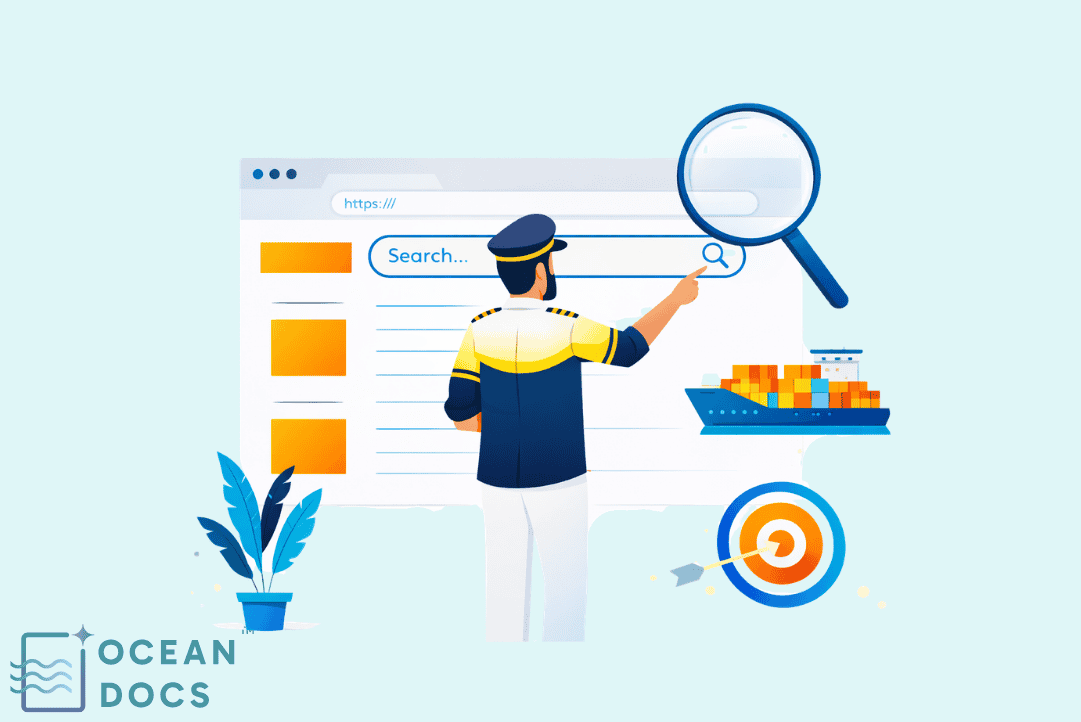
What happens when a crew member follows the wrong Standard Operating Procedure during an emergency?
It may sound like a simple mistake. In reality, it can create serious problems for vessel safety and maritime compliance.
Ships operate in a tightly regulated environment. Crews rely on shipping documents, ship documents, and maritime documentation to guide daily marine operations. These documents ensure shipping compliance with maritime regulations such as SOLAS, MARPOL, IMO regulations, and the ISM Code.
However, the challenge is not always missing information. Sometimes the real issue is using the wrong procedure in the right situation. When this happens, even experienced crews can face delays, compliance risks, and operational confusion.
Modern vessels manage hundreds of procedures across navigation safety, pollution prevention, emergency response, cargo handling, and crew safety. Without strong document intelligence and AI in shipping, crews may struggle to quickly find the correct instructions.
This blog explores why crews sometimes follow the wrong SOP, how it affects maritime compliance, and how AI-powered maritime operations solutions are improving document access and decision support onboard.
Why the Wrong SOP Gets Used
Ships carry a large volume of maritime documentation. These include safety manuals, ship documents, operational procedures, and regulatory guidance. Each document supports different aspects of marine operations and maritime compliance.
During daily operations, crews work under time pressure. They manage cargo operations, navigation safety, vessel safety checks, and regulatory inspections. When a situation changes quickly, crew members may rely on memory or the nearest available procedure.
This often leads to the use of the wrong SOP.
For example, a crew member handling a cargo emergency may refer to an outdated procedure instead of the correct guidance required under ISGOTT or the IMDG Code. Another crew member may follow a Fire Control Plan that applies to a different vessel configuration.
Even though the crew is trying to act responsibly, the wrong procedure may create compliance gaps.
These mistakes become visible during ship surveys, marine surveying inspections, or Port State Control checks. Inspectors often review shipping documentation, verify procedures, and confirm alignment with maritime regulations.
If procedures do not match real operations, the vessel may face compliance observations.
The Complexity of Maritime Regulations
The maritime industry follows many international standards. Ships must comply with SOLAS, MARPOL, IMO regulations, the ISM Code, ISPS Code, and COLREGs. Each regulation defines operational requirements that affect vessel safety, environmental protection, and crew readiness.
For example, MARPOL focuses on pollution prevention and maritime environmental compliance. SOLAS focuses on vessel safety and emergency preparedness. The ISM Code focuses on safety management and operational procedures.
These regulations require accurate maritime documentation and strong ship management practices.
Crews must also follow procedures related to Ballast Water Management, the LSA Code, and the IMDG Code. Tanker vessels must follow ISGOTT guidance. Cargo vessels must maintain updated procedures for navigation safety and emergency response.
When all these rules combine, documentation becomes complex.
Fleet management teams often manage thousands of pages of shipping documentation across multiple vessels. Without smart documentation systems, crew members may struggle to locate the correct procedure quickly.
When Good Intentions Lead to Compliance Risks
In many real situations, crews act with good intentions. They want to protect vessel safety and respond quickly to operational challenges.
However, when procedures are difficult to locate, crews may rely on outdated documents or incomplete instructions.
Consider a case during cargo operations on a tanker vessel. A crew member notices a potential cargo leak and immediately refers to a procedure stored in the vessel’s document folder. The procedure provides guidance for handling cargo incidents but does not reflect the latest ISGOTT safety guidance.
The crew responds according to the document they found.
Later, during a sire inspection or Port State Control review, inspectors identify that the vessel followed outdated instructions. The crew tried to act correctly, but the wrong procedure was used.
Situations like this create audit readiness challenges. Inspectors reviewing maritime compliance often examine documentation systems to confirm that procedures match real operations.
Documentation Challenges at Sea
Ships operate in remote environments. Connectivity may be limited. Crew rotations change frequently. Documentation updates must reach vessels quickly and remain easy to access.
Many vessels still manage procedures through static files or manual document systems. This creates several challenges.
First, crews may struggle to find the right shipping documentation when time is limited.
Second, outdated ship documents may remain accessible even after updates are issued.
Third, crew members may interpret procedures differently depending on training or experience.
These challenges affect fleet management and ship management processes.
Without smart documentation tools, crews must manually search through procedures related to navigation safety, vessel safety, cargo handling, pollution prevention, and emergency response.
This is where AI document intelligence and maritime AI solutions are beginning to change how vessels manage operational knowledge.
How AI Document Intelligence Helps Crews
Modern maritime technology is moving toward intelligent documentation systems. These systems use AI in maritime operations to organize, search, and interpret ship documents.
AI document intelligence can analyze maritime documentation and make it easier for crews to find the right procedure quickly.
For example, a crew member may search for instructions related to ballast water discharge. Instead of manually browsing files, the system can instantly surface the correct procedure linked to Ballast Water Management regulations.
AI in shipping can also connect procedures with regulatory frameworks such as SOLAS, MARPOL, and the ISM Code.
This improves maritime compliance and reduces confusion during operations.
AI-powered maritime operations solutions can also support contextual search. If a crew member reports a cargo incident, the system can recommend relevant procedures from shipping documentation, including guidance from the IMDG Code or ISGOTT.
By connecting operational context with document intelligence, vessels reduce the risk of following incorrect procedures.
Improving Audit Readiness and Inspections
Audit readiness is a major concern for ship operators. Inspections such as Port State Control checks, ship surveys, and sire vetting reviews examine operational procedures closely.
Inspectors verify that shipping compliance processes align with maritime regulations and documented procedures.
When documentation systems are disorganized, vessels may struggle to demonstrate compliance.
AI document intelligence helps improve audit readiness by maintaining structured documentation systems. Procedures remain updated and accessible. Crew members can quickly demonstrate compliance with regulations such as SOLAS, MARPOL, and the ISM Code.
Smart documentation systems also help fleet management teams track document updates across multiple vessels.
This ensures that ship management software distributes updated procedures consistently across fleets.
The Future of AI in Shipping Documentation
The maritime industry is gradually adopting marine technology that improves operational transparency and safety.
AI in maritime operations is becoming a key part of this transformation.
Future documentation systems will combine AI document intelligence with smart documentation platforms. These systems will support ship crew management, vessel operations, and compliance monitoring.
For example, maritime compliance software may automatically alert crews when procedures related to pollution prevention or navigation safety change under IMO regulations.
AI-powered maritime operations solutions may also analyze operational patterns across fleets to identify documentation gaps.
This helps ship management teams improve training, procedures, and safety processes.
Conclusion
Following the wrong SOP is rarely caused by negligence. Most crews work hard to maintain vessel safety and meet maritime compliance requirements.
The real challenge lies in managing large volumes of maritime documentation and ensuring crews can quickly access the right procedure during critical moments.
As maritime regulations continue to evolve, ships need smarter ways to manage shipping documents and ship documents across fleets.
AI document intelligence is becoming an important solution. It helps crews navigate complex documentation systems, supports shipping compliance, and improves operational clarity.
Platforms such as OceanDocs AI aim to simplify maritime documentation by combining document intelligence with maritime AI technology. By helping crews access the right procedures at the right time, these solutions support safer and more reliable marine operations.
FAQs
Why do crews sometimes follow the wrong SOP?
Crews may follow the wrong SOP because shipping documentation is complex and difficult to search quickly during real operations.
How does AI document intelligence help ships?
AI document intelligence helps crews locate the correct procedures within maritime documentation quickly, improving compliance and vessel safety.
What role does maritime AI play in compliance?
Maritime AI supports maritime compliance by connecting operational procedures with regulations such as SOLAS, MARPOL, and the ISM Code.
How does smart documentation improve inspections?
Smart documentation systems organize ship documents and ensure crews can demonstrate compliance during Port State Control inspections and sire vetting.