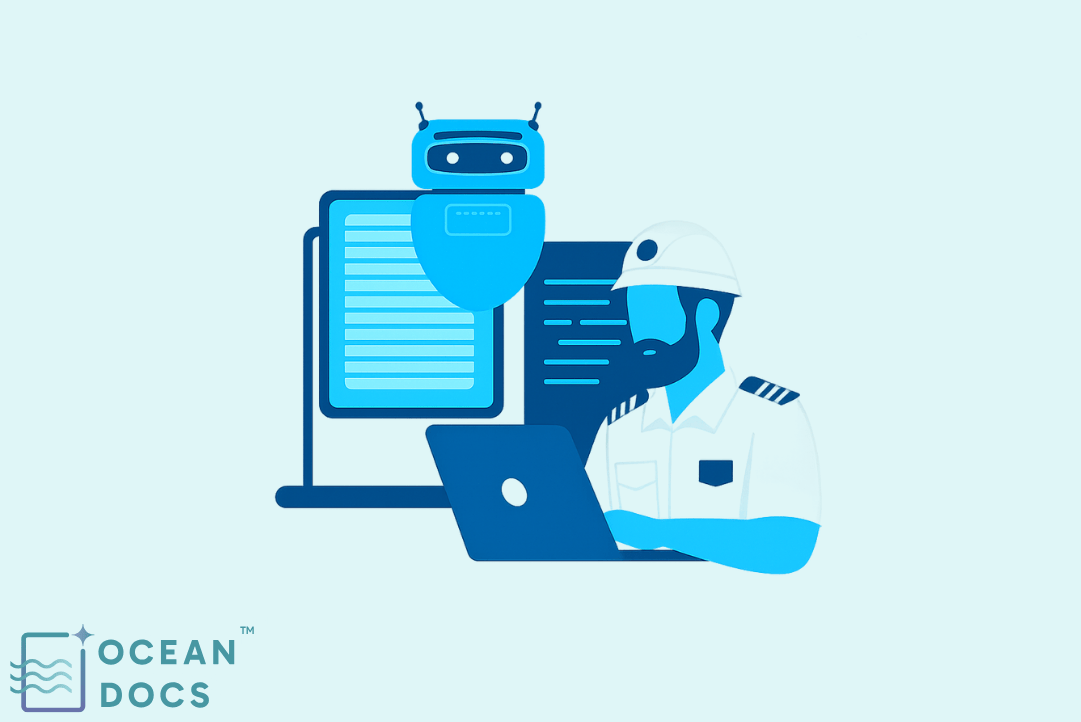
The Link Between Document Intelligence and Safer Decision-Making
December 3, 2025 By OceanDocs AI
How can smarter use of information prevent mistakes at sea and on shore? The link between document intelligence and safer decision-making continues to grow as shipping becomes more complex, regulations tighten, and data volumes increase. When crews, inspectors, and shore teams can understand thousands of shipping documents instantly, they make faster and safer choices while staying compliant.
Why Documents Matter More Than Ever
Every voyage produces a large collection of ship documents, including charter agreements, cargo manifests, safety checklists, and technical reports. In addition, maritime regulations such as MARPOL, SOLAS, the ISM Code, and the ISPS Code shape how a vessel operates daily. These rules protect life, cargo, and the marine environment.
When teams struggle to find the right information in this growing stack of maritime documentation, risks increase. Delays, unsafe work, compliance failures, and weak incident responses often come from missing or misunderstood shipping documentation. Document intelligence turns static files into searchable, usable knowledge that reduces these risks.
What Document Intelligence Means in Shipping
Document intelligence uses AI to read, analyze, and organize large volumes of shipping documents. It works across PDFs, emails, scanned images, logs, and structured forms. Instead of scrolling through folders, teams get key information extracted and linked to operations.
In maritime compliance, AI document intelligence can show which clauses relate to SOLAS maritime rules, which records prove MARPOL regulations compliance, and which reports matter for vetting inspection preparation. It can highlight deadlines, missing entries, and potential risks long before they become problems.
From Rules on Paper to Real-World Safety
Many incidents happen even when written procedures are available. The real issue is the gap between what is written and the decisions made under pressure. This is where document intelligence supports safer decision-making.
AI in maritime operations can collect relevant parts of the ISM Code, company manuals, and past incident reports within seconds. Officers do not rely on memory or scattered files. They make informed choices backed by context. International Safety Management becomes more than a certificate. ISM compliance becomes part of everyday work.
Understanding SOLAS and MARPOL With Clarity
Regulatory knowledge is at the heart of vessel safety. Yet many seafarers still ask basic questions such as what is SOLAS, what is MARPOL, or how these rules apply right now.
A document intelligence system can store clear explanations, such as the SOLAS definition and MARPOL meaning, and connect them to vessel-specific procedures. If someone searches “SOLAS maritime requirements for fire protection,” the exact clauses and checklists appear in seconds.
If a crew member needs guidance on MARPOL Annex I during bunkering or wonders what MARPOL stands for, the system can pull the correct procedures and past findings. This reduces pollution risk, fines, and operational delays.
Strengthening ISM and ISPS With Better Information
The ISM Code and ISPS Code rely on accurate, accessible documentation. ISM maritime safety systems depend on updated risk assessments, maintenance logs, drill records, and audit reports. ISPS security plans depend on version control, access logs, and incident records.
With maritime compliance software powered by document intelligence, teams can track which files connect to each rule. If someone asks what is ISM Code in a practical sense, the system can show responsibilities, procedures, and evidence. This improves compliance and supports daily decision-making.
Passing SIRE, PSC, and Vetting Checks With Confidence
Energy majors and regulators expect strong document control during a SIRE inspection or PSC inspection. Inspectors want more than organized binders. They want evidence of a strong HSEQ culture.
AI-powered maritime operations solutions can map each SIRE vetting or SIRE 2.0 question to the related documents. During vetting inspection preparation, missing certificates, outdated manuals, and overdue drills appear clearly. This reduces stress and improves results.
When a Port State Control officer arrives, crews can retrieve any required document immediately. This builds confidence, trust, and smooth inspections.
HSEQ and Daily Decisions on Board
Health, safety, environment, and quality depend on small decisions made every day. These decisions shape how a job starts, how a lift is planned, or how a near miss is reported.
Maritime AI can review thousands of incident and near-miss reports and find patterns. It might show that certain ports, cargo types, or weather conditions link to repeated issues. Crews can then take preventive steps before something goes wrong.
Reporting also becomes easier. AI for ocean safety can tag new reports, send them to the right people, and highlight similar past cases. This helps teams avoid repeated mistakes.
How Shore Teams Benefit From Document Intelligence
Decision-making continues on shore. Technical, legal, chartering, and HSEQ teams rely on full access to maritime documentation. A missed clause or a lost report can cause disputes and operational delays.
With AI in maritime workflows, shore teams can search years of shipping documents using simple questions. They can ask, “Show all cargo claims involving this terminal” or “Find all ISM audit findings related to mooring.” This turns unstructured archives into a shared knowledge base that supports planning, policy updates, and fleet performance.
Building a Culture of Informed Decisions
Technology supports safer work only when people trust it and use it. This requires clear interfaces, simple training, and leadership support.
Once officers see how fast and accurate the system is, they start to use document intelligence as a real tool. They stop filing documents only for audits and begin using them for daily safety and operational choices.
Conclusion
The link between document intelligence and safer decision-making is strong and growing. When AI understands and organizes shipping documentation, teams gain clarity, speed, and confidence. Regulations such as SOLAS, MARPOL, the ISM Code, and the ISPS Code become practical guidance for everyday tasks. Inspections like SIRE, SIRE 2.0, and PSC become easier to prepare for and complete. By turning scattered ship documents into clear insight, OceanDocs AI helps maritime companies build safer, cleaner, and more reliable operations.