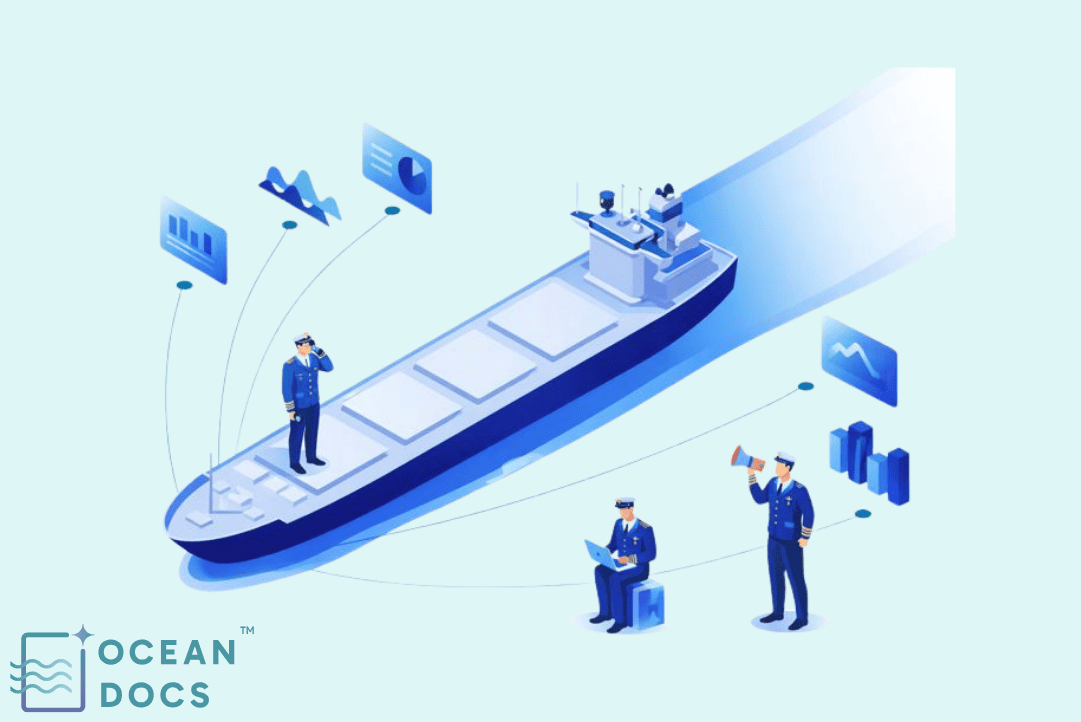
Connected Maritime Ecosystems & Interoperability
December 22, 2025 By OceanDocs AI
The maritime industry is moving toward connected operations where vessels, fleets, ports, and regulators work with shared data instead of isolated systems. Connected maritime ecosystems bring together shipping documents, operational systems, compliance platforms, and analytics into a unified environment. Interoperability is the foundation of this shift. Without interoperable systems, digital tools remain fragmented, and maritime compliance continues to rely on manual coordination. As fleets scale and regulations grow stricter, connected ecosystems are becoming essential for safe, efficient, and compliant marine operations.
Understanding connected maritime ecosystems
A connected maritime ecosystem links ships, fleet management teams, Port Authorities, and service providers through shared digital workflows. These ecosystems combine shipping documentation, ship management software, fleet management solutions, and compliance systems into a single operational fabric. Instead of managing ship documents in silos, teams access maritime documentation through integrated platforms that reflect real-time status. This approach improves visibility across vessels and supports consistent maritime compliance.
Interoperability ensures that different systems can exchange data without friction. In maritime operations, this includes communication between ship management systems, document repositories, survey platforms, and inspection systems. Interoperability reduces duplication, manual uploads, and data loss. It allows shipping documentation to move smoothly across stakeholders while maintaining accuracy and audit readiness.
Why interoperability matters in maritime operations
Maritime operations depend on timely and accurate information. Shipping documentation supports vessel safety, navigation safety, pollution prevention, and regulatory compliance. When systems do not communicate, teams rely on emails, spreadsheets, and manual uploads. This increases the risk of missing ship documents, outdated records, and compliance gaps.
Interoperability helps align shipping compliance with operational workflows. Ship documents linked to SOLAS, MARPOL, ISM Code, ISPS Code, STCW, COLREGs, and other IMO regulations remain accessible and up to date across systems. This improves coordination between technical ship management, ship crew management, and fleet ship management teams.
Connecting shipping documentation across the ecosystem
Shipping documentation sits at the center of the maritime ecosystem. Certificates, logs, manuals, and plans connect vessels to regulators, inspectors, and ports. Interoperable systems ensure that maritime documentation flows securely across platforms used by ship management and fleet management teams.
Connected ecosystems support consistent handling of Fire Control Plan records, ballast water management logs, LSA Code documentation, and IMDG Code compliance files. When documentation updates in one system, it reflects across others. This reduces version conflicts and supports audit readiness during ship surveys and marine surveying activities.
Role of AI in connected maritime ecosystems
AI in maritime strengthens connected ecosystems by adding intelligence to data flows. AI document intelligence analyzes shipping documents across interoperable systems and identifies patterns that manual review cannot detect. It supports predictive compliance, risk prioritization, and smart documentation practices.
AI-powered maritime operations solutions enhance interoperability by standardizing how shipping documentation is classified and shared. AI in shipping links maritime documentation with fleet management data, audit history, and operational signals. This allows compliance teams to focus on risk rather than data reconciliation.
Improving maritime compliance through connectivity
Maritime compliance depends on coordination between vessels, offices, and authorities. Connected ecosystems improve compliance by providing a shared view of documentation status. Ship management teams can track ISM compliance, maritime environmental compliance, and vessel safety indicators across fleets.
Interoperability also supports Port State Control readiness. Inspectors expect quick access to accurate ship documents. Connected systems reduce delays caused by missing files or inconsistent records. This improves inspection outcomes and reduces operational disruption.
Supporting surveys and vetting through interoperable systems
Ship surveys and SIRE vetting require structured documentation and consistent records. Connected maritime ecosystems help teams prepare continuously rather than reactively. AI in maritime analyzes data from interoperable systems to highlight readiness gaps related to ship surveys, marine surveying, and SIRE inspection.
Tanker ship management benefits significantly from connected systems due to the volume and complexity of required documentation. Interoperability ensures that surveyors and inspectors access the same information that ship management teams maintain. This reduces rework and improves trust during inspections.
Fleet and ship management efficiency
Fleet management solutions perform best when connected to documentation and compliance systems. Interoperability allows fleet ship management teams to align operational decisions with documentation status. For example, maintenance schedules can reflect certification expiry timelines. Crew assignments can align with STCW documentation requirements.
Ship management software integrated into a connected ecosystem reduces manual coordination. Technical ship management teams gain real-time visibility into compliance status across vessels. This supports better planning and reduces last-minute interventions.
Data consistency and audit readiness
Audit readiness improves when data remains consistent across systems. Connected maritime ecosystems reduce discrepancies between internal audits, external inspections, and regulatory reporting. AI in shipping monitors audit history and documentation changes across interoperable platforms.
HSEQ teams benefit from centralized access to compliance data. Interoperability supports consistent tracking of corrective actions and closure timelines. This strengthens audit readiness and improves navigation safety and vessel safety outcomes.
Challenges in building connected maritime ecosystems
Despite clear benefits, building connected ecosystems presents challenges. Legacy systems often lack standard interfaces. Different stakeholders use different data formats. Security and data ownership concerns also affect interoperability.
AI-powered maritime operations solutions help address these challenges by normalizing data and automating document classification. Smart documentation reduces reliance on rigid formats and enables flexible integration. Over time, interoperability becomes easier as systems align around shared standards.
Long-term value of interoperability in maritime
Connected maritime ecosystems support long-term digital transformation. They reduce operational friction, improve compliance consistency, and support scalability. As maritime regulations evolve, interoperable systems adapt faster than manual processes.
AI in maritime ensures that connected ecosystems remain intelligent and proactive. Document intelligence supports predictive compliance, reduces repeat deficiencies, and enables continuous improvement. Interoperability becomes a strategic asset rather than a technical feature.
Future outlook for connected maritime ecosystems
The future of maritime operations depends on collaboration across vessels, fleets, ports, and regulators. Connected ecosystems enable shared visibility and coordinated action. Interoperability allows shipping documentation to move seamlessly while maintaining compliance and security.
As AI in shipping advances, connected systems will support more autonomous compliance workflows. Predictive insights will guide decision-making across marine operations. This will improve safety, efficiency, and trust across the maritime value chain.
Conclusion
Connected maritime ecosystems and interoperability are no longer optional. They are essential for managing complex shipping documentation, maintaining maritime compliance, and supporting safe marine operations. By connecting systems, data, and workflows, shipping companies gain clarity and control across fleets. AI document intelligence adds predictive capability and reduces manual burden. For organizations seeking to build interoperable and intelligent maritime ecosystems, OceanDocs AI provides AI-powered maritime operations solutions that enable connected, compliant, and future-ready shipping operations.