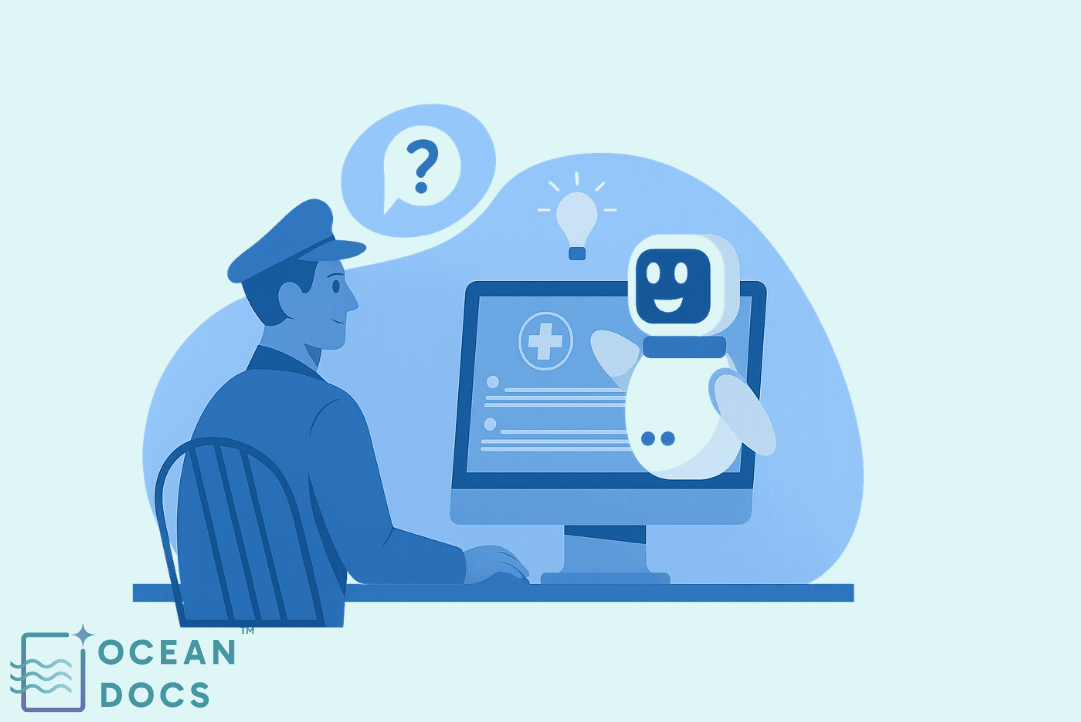
AI for Quick Answers: From COLREGs to ISGOTT in Seconds
December 4, 2025 By OceanDocs AI
Maritime work moves fast. Officers, engineers, and cargo teams often need quick and reliable guidance. A single question about COLREGs, ISGOTT, SOLAS, or MARPOL can shape an important decision. Yet many seafarers still search through long manuals, old shared folders, or scattered PDFs. A smarter approach can save minutes, reduce mistakes, and support safer operations at sea.
This guide explains how AI for quick maritime answers helps crews access essential rules and ship documents in seconds. It also shows how AI document intelligence supports vessel safety, maritime compliance, and daily work on board.
The Daily Struggle With Critical Information
Life at sea runs on accurate information. A watch officer may need to confirm a COLREGs rule during a crossing situation. A cargo officer may need ISGOTT guidance before approving a transfer. Engineers often check MARPOL regulations or SOLAS meaning during maintenance tasks. Many of these answers sit inside heavy books or mixed digital files.
Searching these sources takes time. Some manuals stay in the office. Some PDFs hide inside email chains. Some scanned ship documents are unreadable. When time matters, delays increase risk and slow decision making.
AI solves this gap by giving direct answers instead of long searches.
Why Quick, Accurate Answers Matter at Sea
Speed matters because small delays can grow into operational issues. Accuracy matters even more because unclear rules can lead to unsafe actions. A wrong interpretation of COLREGs can cause a near miss. A missing ISGOTT detail can affect cargo safety. Poor understanding of SOLAS maritime requirements or MARPOL meaning can trigger findings during a PSC inspection.
Crews must protect vessel safety, follow shipping compliance rules, and prepare for audits. These include SIRE inspection, SIRE 2.0, and vetting inspection preparation. Better access to clear information supports stronger maritime compliance.
What a Maritime-Ready AI Should Actually Do
Many tools claim to offer maritime AI, but few understand the real challenges on board. A useful system should act like a focused assistant that understands shipping documents, maritime documentation, and international standards.
A capable AI should:
-
Read technical manuals, circulars, procedures, and scanned PDFs
-
Understand ISM maritime frameworks, COLREGs, ISGOTT, SOLAS, and MARPOL
-
Provide exact references, not general summaries
-
Support quick answers in simple language
-
Organize shipping documentation with AI document intelligence
For example, a user can ask for the correct ISGOTT section for a cargo transfer. The AI should return both the text and the related forms or checklists. A user can ask what is SOLAS or what is ISM Code, and the system should respond with accurate and practical explanations.
Core Regulations That Shape Daily Work
SOLAS
SOLAS definition centers on safety of life at sea. SOLAS maritime rules set standards for construction, equipment, emergency systems, and safe operation. Clear understanding of SOLAS meaning helps officers link daily tasks to global vessel safety requirements.
MARPOL
MARPOL stands for the International Convention for the Prevention of Pollution from Ships. MARPOL regulations guide the handling of garbage, sewage, emissions, chemicals, and oil. Understanding MARPOL meaning helps prevent pollution and avoids problems during a PSC inspection. AI for ocean operations should surface the correct MARPOL chapter based on any question.
ISM Code
The ISM Code supports international safety management. ISM compliance creates safe routines through procedures, checklists, and reporting. A good AI helps officers connect tasks to the correct ISM Code clause so that both crew and management can maintain strong ISM maritime standards.
These frameworks appear constantly in shipping documentation. AI helps crews move through them with less effort and better accuracy.
Security, Vetting, and Inspections Made Simpler
Compliance also includes security and external assessments.
ISPS Code
The ISPS Code sets rules for ship and port facility security. Crews often need to check access control instructions, visitor rules, and security levels. Quick access to correct answers prevents confusion during drills or real events.
SIRE Vetting and SIRE 2.0
Oil majors and charterers use sire vetting to assess standards. SIRE 2.0 requires detailed evidence. When inspectors ask for a specific record, crews must respond instantly. AI document intelligence helps them find the correct file in seconds instead of hours.
HSEQ and Internal Reviews
HSEQ covers health, safety, environment, and quality. These requirements appear across many manuals and records. AI-powered maritime operations solutions organize all ship documents so teams can demonstrate compliance confidently during internal audits or external reviews.
Smarter Handling of Ship Documents and Records
Modern ships create huge volumes of shipping documentation. These include:
-
Certificates
-
Technical logs
-
Permits
-
Checklists
-
Risk assessments
-
Survey records
-
Emergency procedures
Many exist as scanned PDFs or photos. Finding a single file during a PSC inspection can take too long.
Modern maritime compliance software with strong AI document intelligence solves this. It can:
-
Read and tag scanned documents
-
Organize by regulation, topic, or vessel
-
Surface the right record instantly
-
Match documents to SOLAS, MARPOL, ISM Code, and ISPS Code requirements
This improves shipping compliance and keeps vessel safety documents accurate.
How AI in Maritime Improves Everyday Work
AI in maritime should feel practical and easy. Officers should be able to ask clear questions and get precise answers. The system should quote the exact paragraph from a manual, the correct ISGOTT passage, or the right COLREGs rule.
Examples include:
-
Asking for MARPOL regulations on discharge
-
Asking what SOLAS requires for firefighting equipment
-
Asking for the ISM Code clause linked to a risk assessment
-
Asking for documents needed for vetting inspection preparation
AI connects procedures, regulations, and real ship documents. This turns it into a daily working tool for bridge, engine, and cargo teams.
Bringing Everything Together On Board and Ashore
When companies integrate maritime AI into their operations, they create a shared knowledge hub. Teams on board can check COLREGs, SOLAS maritime rules, and ISGOTT quickly. Cargo teams can align MARPOL regulations with company policies. Security teams can verify ISPS Code requirements. Managers ashore can track compliance, review shipping documentation, and support crews during PSC inspection or sire vetting events.
Consistent use of AI document intelligence raises the overall standard of maritime compliance.
Conclusion
AI for Quick Answers: From COLREGs to ISGOTT in Seconds becomes powerful when it connects real ship documents with global maritime regulations. A focused system that understands SOLAS, MARPOL, ISM Code, ISPS Code, HSEQ, and company procedures supports faster, safer, and more confident decisions. OceanDocs AI delivers this integrated intelligence so crews can access the right answers in seconds and stay safe, compliant, and inspection ready.