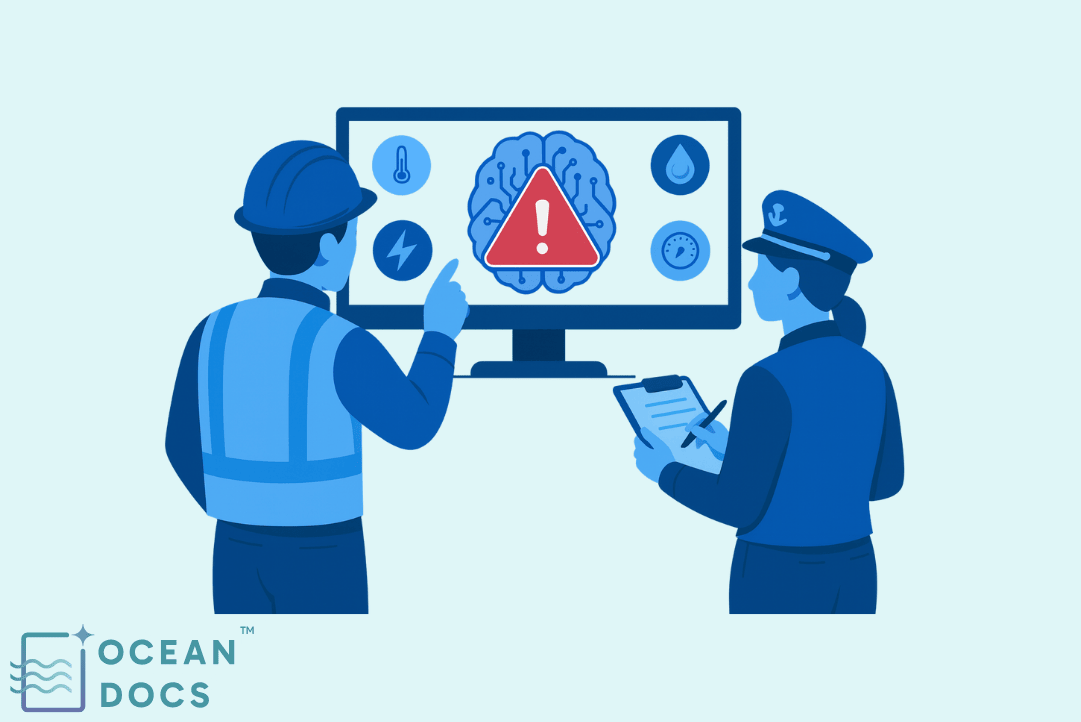
AI-Powered Safety Briefings for Navigation and Emergency Teams
December 8, 2025 By OceanDocs AI
Modern fleets face tighter schedules, complex rules, and rising safety expectations. AI-Powered Safety Briefings for Navigation and Emergency Teams close the gap between paperwork and real-time action, helping crews stay focused on safe, efficient operations instead of searching through documents.
Why smarter safety briefings matter at sea
Navigation crews and emergency teams work in fast-changing environments. Traditional safety briefings rely on printed manuals, static checklists, and long toolbox talks that often feel repetitive or outdated.
AI-powered maritime tools turn these briefings into adaptive, updated guidance built from live vessel data, voyage plans, and regulatory changes. Bridge teams, engineers, and emergency response units receive focused, clear instructions tailored to their tasks.
From documents to decisions with AI in maritime
Modern ships generate endless information: procedures, voyage records, incident reports, and checklists. Turning this into quick decisions is difficult without support.
AI in maritime can read, classify, and summarize massive volumes of content. The same technology powers AI-driven safety briefings that present the right insights for each operation instead of showing full manuals.
For example, before departure, AI can generate a concise pre-sailing briefing that highlights route risks, restricted waters, COLREGs reminders, and navigation safety hazards based on past incident patterns.
How AI safety briefings work in practice
AI-powered maritime operations solutions build on existing ship management software and documentation systems. They connect to checklists, risk assessments, and voyage plans, then use AI document intelligence to produce targeted, role-based safety briefings.
For navigation teams, briefings may include:
-
Route-specific hazards and COLREGs hotspots
-
Updates linked to SOLAS, STCW, and ISM Code requirements
-
Reminders tied to Port State Control priorities
For emergency teams, briefings may highlight:
-
Fire Control Plan updates and muster list changes
-
Drills required for ISPS Code and LSA Code compliance
-
Pollution Prevention steps aligned with MARPOL and Ballast Water Management rules
Each briefing is short, focused, and easy to review during handovers or pre-job meetings.
Strengthening maritime compliance with smarter briefings
Maritime documentation grows more complex as IMO regulations expand. Crews must navigate SOLAS, MARPOL, the ISM Code, STCW, ISPS Code, COLREGs, and port-specific rules.
AI-powered briefings help navigation and emergency teams stay aligned with maritime regulations without re-reading full rule books. The system maps tasks to relevant rules and company procedures, embedding those links in simple, clear reminders.
This supports:
-
ISM compliance during operations and drills
-
Stronger readiness for Port State Control inspections and ship surveys
-
Better audit preparation across HSEQ programs and tanker ship management
Boosting vessel safety with predictive insights
Vessel safety needs more than correct paperwork. Crews need timely warnings and practical instructions. AI in shipping can analyze incident data, near-miss reports, SIRE vetting findings, and Marine surveying results, then feed those insights into future briefings.
If SIRE inspection data shows repeated enclosed space entry issues, AI-powered briefings can:
-
Flag high-risk tasks on upcoming plans
-
Push reminders on gas testing, communication, and rescue procedures
-
Suggest updates to technical ship management packs
This creates a continuous improvement loop between findings and frontline action.
Connecting fleet management and ship crew management
Fleet management teams oversee many vessels and routes. Ensuring consistent safety communication is challenging. AI-powered maritime operations solutions provide a unified framework for generating safety briefings across the fleet.
In large fleet ship management, AI can:
-
Tailor briefings for vessel types, such as tankers with strict ISGOTT and IMDG Code requirements
-
Share best practices from one vessel’s incidents with the entire fleet
-
Support HSEQ teams by standardizing critical navigation and emergency response messages
For ship crew management, this improves familiarization for new joiners by giving them targeted digital briefings from day one.
Smart documentation as the backbone
AI-powered safety briefings depend on clean, well-structured information. Smart documentation tools transform scattered shipping documents into searchable, usable data.
With AI in shipping, companies can digitize, tag, and standardize procedures, manuals, and checklists. This ensures maritime documentation stays aligned with current IMO regulations and reduces manual updates across fleet management systems.
This documentation layer powers maritime compliance software, which generates accurate, up-to-date briefings every time.
Supporting inspectors, surveys, and operational reviews
Surveyors and audit teams expect proof of active, effective safety communication. They want more than checklists—they want evidence of real understanding.
AI-powered briefings help with:
-
Showing what navigation and emergency teams were briefed on before key operations
-
Connecting briefings to ship surveys, SIRE vetting preparation, and Marine surveying
-
Demonstrating how AI document intelligence supports vessel safety and maritime environmental compliance
This reduces surprises during inspections and makes audit readiness part of daily operations.
The future of AI-powered maritime safety
Marine Technology continues to advance, and maritime AI is moving toward real-time decision support for bridge and emergency teams.
Future AI-powered safety briefings will likely:
-
Update instantly based on weather, traffic, and equipment status
-
Integrate with navigation systems to highlight COLREGs conflict risks visually
-
Adjust emergency response guidance using performance data from drills
As maritime compliance demands grow, AI in maritime will help crews focus on safe navigation, fast emergency response, and protection of people and the environment.
Conclusion
AI-Powered Safety Briefings for Navigation and Emergency Teams turn complex rules and ship management procedures into simple, timely guidance. By combining maritime AI, smart documentation, and fleet management solutions, operators reduce risk, strengthen maritime compliance, and improve vessel safety across every voyage. OceanDocs AI provides the document intelligence and AI-powered maritime operations tools needed to make these smarter briefings possible.