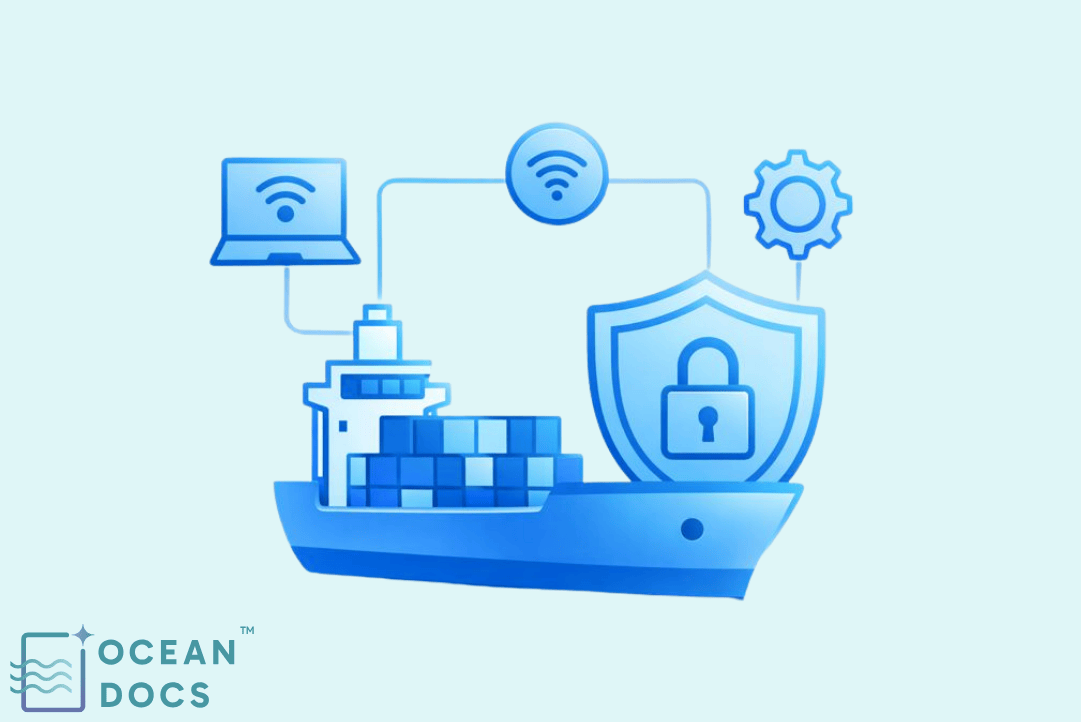
Maritime Security & Threat Awareness
December 30, 2025 By OceanDocs AI
What puts a vessel at risk even before it leaves port?
Often, it is not weather or machinery. It is gaps in security awareness and documentation.
Maritime security today goes far beyond physical guards and access controls. It depends on how well crews, shore teams, and Port Authorities understand threats, follow maritime regulations, and manage ship documents. In a world of rising geopolitical tension, cyber risks, and stricter inspections, maritime security and threat awareness have become critical to safe marine operations.
AI now plays a growing role in strengthening this awareness. Through AI in maritime operations and ai document intelligence, shipping companies can track risks, improve preparedness, and support consistent compliance across global fleets.
Why Maritime Security Has Become More Complex
Modern shipping operates under multiple layers of security oversight. Frameworks like IMO regulations, the ISPS Code, SOLAS, and STCW define how vessels must prepare for security threats. At the same time, Port Authorities apply local rules that reflect regional risk patterns.
Threats can include:
-
Unauthorized access to vessels
-
Cargo tampering or smuggling
-
Cyber incidents affecting ship management software
-
Environmental risks linked to Pollution Prevention failures
-
Human safety risks tied to weak vessel safety procedures
Each threat links back to maritime documentation. Missing or outdated ship documents weaken a vessel’s security posture and raise red flags during Port State Control or sire inspection.
The Role of Documentation in Maritime Security
Maritime security relies heavily on accurate shipping documents. These records prove that a vessel follows required procedures and trains its crew properly.
Key documents include:
-
ISPS Code plans and access control records
-
Fire Control Plan and emergency response manuals
-
HSEQ procedures and security drills
-
STCW certificates for ship crew management
-
COLREGs and navigation safety guidelines
If crews cannot locate or verify these documents quickly, security checks slow down. Inspectors may escalate reviews, which affects port clearance and audit readiness.
Where Traditional Systems Fall Short
Many fleets still manage maritime documentation using static folders or basic ship management software. These systems store documents but do not provide threat awareness.
Common issues include:
-
Security-related ship documents scattered across folders
-
No visibility into which ports apply stricter ISPS checks
-
Delayed updates to maritime regulations reaching vessels
-
Manual tracking of inspection findings and sire vetting risks
This approach depends too much on experience and memory. It creates inconsistency across fleet ship management operations and increases exposure during inspections.
How AI Improves Maritime Security Awareness
Maritime AI introduces intelligence into documentation and compliance workflows. Instead of reacting to threats, operators gain early awareness.
Key ways AI supports maritime security include:
Security-focused document intelligence
AI organizes maritime documentation based on security relevance. It highlights ISPS Code records, emergency plans, and vessel safety documents during pre-arrival preparation.
Threat pattern recognition
AI analyzes inspection data, Port State Control findings, and sire inspection trends. This helps fleets understand which security areas attract attention at specific ports.
Context-aware prioritization
AI adjusts document focus based on vessel type, cargo, and destination. Tanker ship management workflows emphasize ISGOTT and Pollution Prevention controls. Passenger vessels highlight LSA Code and crew training records.
Faster response during checks
When inspectors request security-related ship documents, AI-powered systems retrieve them instantly. This reduces delays and improves confidence.
Supporting Port and Coastal Security Requirements
Ports face pressure to manage security without disrupting traffic. Document intelligence helps align vessel readiness with port expectations.
AI supports:
-
Faster verification of shipping documentation during security checks
-
Clear visibility into maritime compliance status
-
Reduced back-and-forth between crews and Port Authorities
By reducing friction, AI helps ports maintain security while keeping operations efficient.
Strengthening Environmental and Safety Security
Security also includes protecting the marine environment and crew welfare. Failures in these areas create serious threats.
AI tracks and prioritizes:
-
MARPOL compliance records
-
Ballast Water Management documentation
-
Pollution Prevention procedures
-
Fire Control Plan readiness
-
Vessel safety and emergency drills
This supports maritime environmental compliance and reduces the risk of incidents that can escalate into security emergencies.
Cyber and Operational Threat Awareness
As ship management software becomes more connected, cyber risks increase. While AI document intelligence does not replace cyber defenses, it supports operational awareness.
By ensuring accurate documentation for procedures, access roles, and response plans, AI helps crews follow defined protocols during incidents. This strengthens overall marine operations resilience.
Benefits for Fleet and Ship Management Teams
Improved maritime security awareness delivers clear operational benefits:
-
Faster security clearance at ports
-
Fewer inspection escalations
-
Better audit readiness during ship surveys and marine surveying
-
Stronger coordination between ship management and shore teams
-
Consistent compliance across fleet management solutions
When documentation supports awareness, crews focus on operations instead of searching for files.
The Link Between Security and Operational Efficiency
Security failures cause delays, detentions, and reputational damage. Efficient documentation reduces these risks.
Document intelligence transforms maritime documentation into a proactive security tool. Instead of reacting to inspections, fleets anticipate requirements and respond with confidence.
As inspection regimes grow stricter, this proactive approach becomes essential.
Why Maritime Security Needs Intelligence, Not Just Rules
Rules alone do not create safety. Awareness does.
Maritime regulations define what must be done. AI helps teams understand when and where to act. By linking ship documents to real-world threats, AI supports smarter decision-making across marine operations.
This shift is especially important as vessels operate across diverse regions with varying risk profiles.
Conclusion
Maritime security and threat awareness depend on more than physical controls. They rely on accurate shipping documents, strong maritime documentation practices, and timely access to critical ship documents. AI in maritime operations strengthens this foundation by applying ai document intelligence to security workflows. It helps fleets improve audit readiness, support maritime compliance, and respond faster to emerging risks. OceanDocs AI delivers this capability by providing intelligent, AI-powered maritime operations solutions designed to enhance security awareness across global shipping.
FAQs
What is maritime security threat awareness?
It is the ability to identify, prepare for, and respond to security risks using procedures, training, and documentation.
How does AI support maritime security?
AI organizes and prioritizes security-related ship documents, helping crews and inspectors act quickly.
Does AI replace security officers or inspections?
No. AI supports human teams by improving awareness and access to information.