Role-Based Access for Maritime Documentation and Compliance
November 13, 2025 By OceanDocs AI
If you have ever worked on a vessel, you know how overwhelming document management can be. Between safety manuals, inspection reports, certificates, and compliance logs, there is always something to review or update. Missing or outdated records can delay inspections or even ground a ship. This is where role-based document access helps. It gives every person on board and ashore access only to the files they need, making maritime documentation safer, faster, and more organized.
In modern ship operations, every process depends on accurate and timely documentation. From navigation to inspection readiness, crews rely on shipping documents that prove regulatory adherence and maritime compliance. As digitalization continues to expand across the industry, document management systems with role-based access have become essential for efficiency and control.
Why Document Access Matters in Ship Operations
A single vessel carries thousands of ship documents, including certificates under SOLAS, MARPOL, and the ISM Code, along with Safety Management System manuals, training records, and Port State Control reports. These documents are not just administrative files. They are the foundation of vessel safety, Pollution Prevention, and smooth Port Operations.
Uncontrolled access can lead to confusion and risk. For instance, if a crew member edits a Fire Control Plan without approval, it can cause serious issues during audits or inspections. Missing or outdated shipping documentation can result in failed SIRE Vetting or detention by Port Authorities.
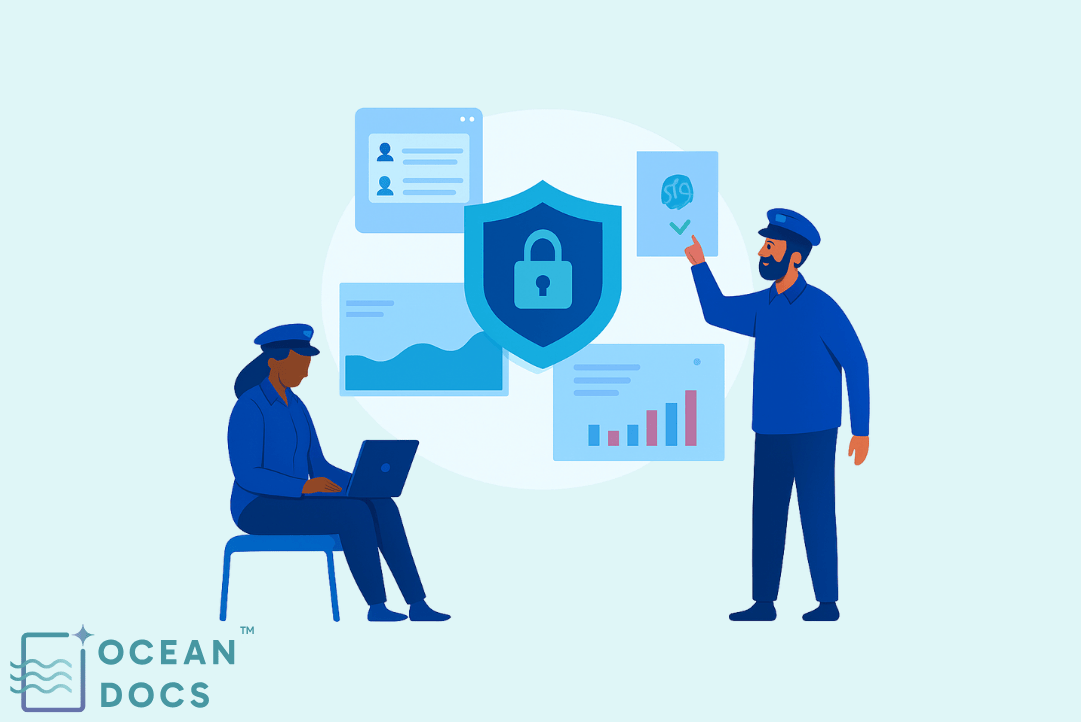
By assigning access rights based on crew roles, captains, safety officers, and engineers can manage only the files relevant to their duties. This brings clarity and accountability across all levels of maritime documentation.
How Role-Based Document Access Works
Role-based access control (RBAC) allows organizations to decide who can view, upload, or modify specific shipping documents. This system is simple and practical.
-
Masters and Captains: Have access to all Safety Management System manuals, COLREGs, ISM Code, and Maritime Security files.
-
Chief Engineers: Can view technical manuals, maintenance records, and risk assessment forms under HSEQ systems.
-
Safety Officers: Handle Pollution Prevention reports, STCW training records, and Fire Control Plans.
-
Port Agents and Auditors: Access selected shipping compliance and inspection data during Port Operations.
-
Crew Members: Can view only training material, safety procedures, and Electronic Logbooks relevant to their role.
This structured access keeps data consistent and prevents unauthorized changes. When combined with Automated Document Processing, it also speeds up document handling and reduces errors.
How Role-Based Access Supports Maritime Compliance
Compliance with international regulations such as SOLAS, MARPOL, and the ISM Code depends on accurate documentation. Authorities require proof of training, maintenance, and Safety Management System updates during every inspection.
With role-based access, compliance becomes easier to manage. Every edit or upload is recorded, creating a traceable audit trail. Inspectors can check when a file was last updated and by whom. This transparency improves audit readiness and builds trust with Port Authorities.
For example:
-
During Port State Control checks, officers can review ISM maritime updates without searching through folders.
-
For SIRE 2.0 inspections, tanker ship management teams can share selected documents with vetting inspectors securely.
This method ensures that the right information is always available to the right person, supporting faster decision-making and smoother maritime compliance.
Improving Ship Management with Role-Based Control
Modern ship management software and fleet management solutions integrate role-based access with document intelligence. This allows ship management companies to maintain consistency across all vessels in their fleet.
Each department handles its own set of documents with limited overlap. This reduces confusion, improves communication, and enhances control during audits. With AI document intelligence and AI for regulatory compliance, systems can automatically assign document access based on a user’s rank or department.
For example, when a safety officer uploads an updated ISGOTT or LSA Code checklist, the system automatically shares it with the relevant team on board and ashore. This saves time and reduces manual errors, improving both safety and performance.
Benefits of Role-Based Document Access
Adopting role-based document access provides benefits across every stage of maritime operations:
1. Better Data Security
Sensitive files such as Maritime Security or Pollution Prevention reports remain protected from unauthorized users.
2. Faster Audits
Inspectors and Port Authorities can find documents quickly during Port State Control or SIRE Vetting inspections.
3. Reduced Errors
Restricted editing prevents accidental deletion or version conflicts for critical documents such as Fire Control Plans or ISM Code updates.
4. Greater Accountability
Each document change is tracked, ensuring that every user’s action can be verified during reviews.
5. Seamless Automation
AI in shipping and automation tools can handle document categorization and flag missing records for quick correction.
6. Improved Crew Coordination
Access levels help ensure that each crew member has the right seafarer training materials and safety guidelines without being overwhelmed by unrelated files.
How Automation and AI Strengthen Document Access
AI-driven document management systems are now central to digitalization in the maritime industry. These tools use Automated Document Processing and document intelligence to recognize, categorize, and distribute files based on type and relevance.
For example, if an engineer uploads a new MARPOL certificate, the system can automatically detect it, label it correctly, and assign view permissions to the relevant officer. This process improves regulatory adherence and reduces manual filing work.
AI-based solutions also alert the crew when a certificate is about to expire or when an inspection record needs updating. This ensures inspection readiness and helps maintain continuous compliance with IMO regulations.
Fleet-Wide Standardization and Safety
Large ship management companies operate multiple vessels across different regions. Role-based access creates consistency across the entire fleet management network. Every ship follows the same document handling and compliance standards, regardless of its location.
This standardization simplifies ship surveys, marine surveying, and interactions with Port Authorities. When an auditor requests documentation, managers can provide digital access within minutes instead of sending physical copies.
During geopolitical disruptions or limited connectivity, encrypted access also allows vessels to share data securely without compromising confidentiality.
Smarter Shipping with Controlled Access
The maritime industry is moving toward smart shipping, where automation and AI work together to improve safety and efficiency. Role-based document access plays a key part in this transformation. It ensures that every team member has the tools they need to do their job while keeping compliance data secure and traceable.
By combining AI for regulatory compliance, document management system software, and Maritime software solutions, operators can simplify documentation, reduce delays, and maintain Safety Management System integrity. This approach supports a more transparent and reliable future for marine operations.
Conclusion
Role-based access is no longer optional in maritime document management. It ensures that the right people handle the right documents at the right time. By reducing manual errors and improving visibility, this system strengthens shipping compliance, enhances audit readiness, and supports safer and more efficient ship operations.
With continued advances in AI document intelligence and digitalization in the maritime industry, ships are now better equipped to handle the growing demands of maritime regulations. Controlled access is not just about security. It is about building a connected, compliant, and smarter maritime ecosystem.