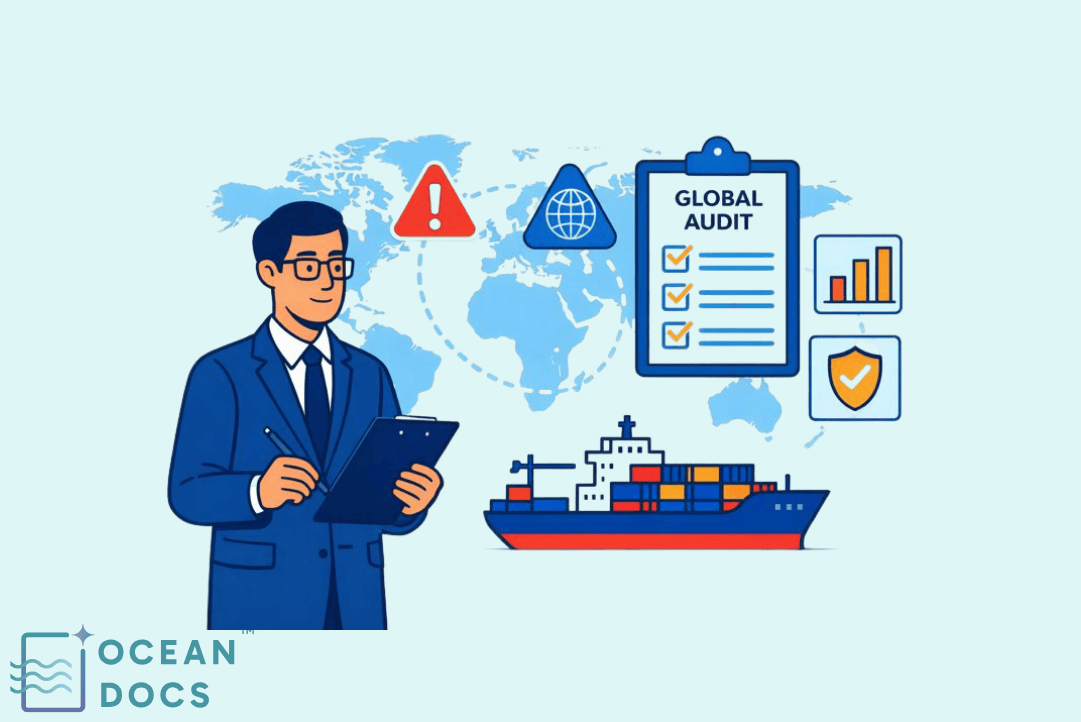
Why Compliance Is a Shared Responsibility
January 15, 2026 By OceanDocs AI
Who is responsible for compliance at sea?
Many people point to the captain. Some say the ship manager. Others look at port authorities or inspectors. In reality, maritime compliance works only when responsibility is shared across the entire marine ecosystem.
Shipping documents, maritime documentation, and ship documents move through many hands every day. Each role plays a part in keeping vessels compliant, safe, and inspection ready. When one link breaks, compliance fails.
This is why compliance cannot sit with one person or one department.
Compliance Starts With Documentation
Shipping documentation sits at the center of maritime compliance. Certificates, logs, plans, and manuals support vessel safety, navigation safety, and pollution prevention. Inspectors rely on these records during Port State Control checks, SIRE inspection visits, and audit readiness reviews.
Maritime regulations such as SOLAS, MARPOL, and IMO regulations demand accurate and up to date maritime documentation. The ISM Code, ISPS Code, STCW, COLREGs, and ISGOTT all depend on proper shipping documents to prove compliance.
If ship documents stay scattered across emails, folders, and local drives, teams struggle to maintain shipping compliance. Errors creep in. Expired certificates go unnoticed. Fire Control Plan updates get missed. These gaps increase risk during inspections.
Ship Crews Play a Critical Role
Ship crew management teams and onboard officers work with ship documents every day. They maintain logs, update checklists, and record operational events tied to maritime environmental compliance and vessel safety.
Crew members support compliance by following documented procedures under ISM maritime rules. They use maritime documentation to guide safe operations, ballast water management, cargo handling under IMDG Code, and lifesaving appliance checks under the LSA Code.
When crews lack clear access to updated shipping documentation, compliance weakens. Good systems help crews focus on safe marine operations rather than paperwork stress.
Shore Teams Carry Equal Responsibility
Ship management software and fleet management solutions support compliance at scale. Shore teams oversee fleet ship management, tanker ship management, and technical ship management across multiple vessels.
These teams ensure ship documents stay aligned with maritime regulations. They prepare vessels for ship surveys and marine surveying activities. They also support SIRE vetting and audit readiness by maintaining accurate records.
Fleet management depends on visibility. Without shared access to shipping documents, teams struggle to track compliance across vessels. This creates gaps that surface during inspections.
Port Authorities and Inspectors Complete the Chain
Port authorities rely on shipping documentation to assess compliance quickly. Port State Control officers review ship documents to confirm alignment with SOLAS, MARPOL, and IMO regulations.
Inspectors expect consistency. They look for proof that maritime compliance is active and ongoing. They check pollution prevention records, safety procedures, and security plans.
When documentation appears fragmented, inspectors question vessel safety and management quality. Shared responsibility ensures that every stakeholder supports the same compliance standard.
Why Technology Now Shapes Compliance
Marine technology has changed how compliance works. Manual systems struggle to keep pace with regulatory updates and inspection demands. This is where document intelligence and AI in maritime operations matter.
AI document intelligence helps teams organize shipping documents, track expiry dates, and surface gaps early. Maritime compliance software reduces reliance on memory and manual checks.
AI in shipping supports smarter compliance by linking ship documents to operational context. It helps teams prepare for SIRE inspection, Port State Control visits, and internal audits with confidence.
AI powered maritime operations solutions do not replace responsibility. They strengthen it by making compliance visible and shared.
Compliance Breaks When Ownership Is Unclear
Compliance fails when teams assume someone else owns it.
Captains may expect shore teams to manage documents. Shore teams may rely on crews to update records. Fleet managers may assume systems handle everything automatically.
Shared responsibility means clear roles supported by shared access. Everyone must see the same maritime documentation and understand how their actions affect shipping compliance.
This approach improves HSEQ outcomes, vessel safety, and trust during inspections.
Building a Culture of Shared Compliance
Strong compliance cultures focus on collaboration. They align ship management, fleet management, and marine operations around common goals.
This includes:
-
Clear access to shipping documents
-
Consistent maritime documentation standards
-
Regular reviews tied to maritime regulations
-
Technology that supports audit readiness
When teams treat compliance as a shared task, performance improves. Inspections become smoother. Crews feel supported. Shore teams gain confidence.
The Role of AI in Shared Compliance
Maritime AI solutions now support this shared model. AI in maritime environments helps teams monitor documentation health across fleets. AI powered maritime operations solutions reduce manual effort while improving accuracy.
Document intelligence ensures that ship documents remain current and accessible. Maritime AI tools help teams stay aligned with evolving IMO regulations and compliance requirements.
Technology does not remove accountability. It reinforces it.
Conclusion
Compliance at sea works only when everyone participates. Shipping compliance depends on shared responsibility across crews, managers, and port authorities. Maritime documentation connects these roles and supports safe, efficient marine operations.
As regulations grow more complex, shared systems matter more than ever. This is where OceanDocs AI helps teams manage shipping documents, support maritime compliance, and build confidence across fleets through intelligent, AI driven documentation workflows.
FAQs
Why is maritime compliance a shared responsibility?
Because shipping documents and compliance tasks involve crews, shore teams, and inspectors working together.
How do shipping documents affect inspections?
Inspectors rely on accurate maritime documentation to assess safety, security, and environmental compliance.
Can AI help with maritime compliance?
Yes. AI document intelligence improves visibility, reduces errors, and supports audit readiness across fleets.