Why Faster Access to Information Reduces Errors
January 12, 2026 By OceanDocs AI
Why do errors happen even when crews follow procedures and have experience?
In many cases, the problem is not knowledge. It is timing. When crews cannot access the right information quickly, small mistakes slip in. At sea, these mistakes can affect safety, compliance, and operations.
Faster access to information plays a direct role in reducing errors, especially during high-pressure maritime operations.
Errors often start with delays, not wrong decisions
Most crews know what to do. The challenge is finding the correct guidance at the moment it is needed.
Shipping documents and maritime documentation usually exist in full. Procedures, checklists, and safety instructions sit inside PDFs, folders, or onboard systems. When access takes too long, crews rely on memory.
Memory works until pressure rises. That is when errors appear.
Time pressure changes behavior onboard
Marine operations rarely allow long pauses. Crews handle navigation safety, vessel safety, communication, and reporting at the same time. When something goes wrong, every second matters.
If crews must search manually through ship documents, they delay action or skip verification. Faster access removes this friction and supports safer choices.
Why searching documents increases risk
Manual search adds cognitive load. Crews must remember file locations, document names, and version details before they can act.
Under stress, this process breaks down. Important updates stay hidden inside maritime documentation. This affects shipping compliance and increases the risk of missing steps tied to maritime regulations.
Reducing search time reduces mental strain.
Faster access supports better situational awareness
Situational awareness depends on seeing what matters now.
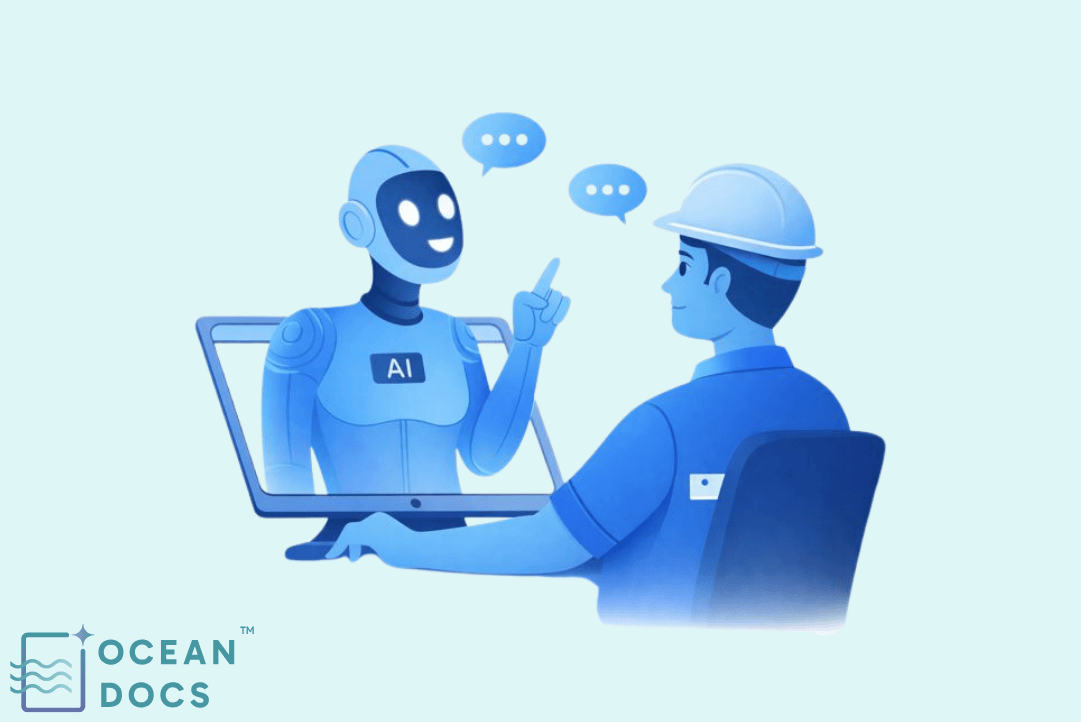
AI in maritime helps by connecting information to context. AI document intelligence reads shipping documents and understands their content. It can surface relevant sections based on the situation.
Instead of scrolling through pages, crews see guidance instantly. This clarity reduces confusion and prevents avoidable errors.
Errors grow when information arrives too late
Late information is almost as risky as wrong information.
If crews find a procedure after an action is complete, the damage may already be done. This often happens during inspections, incidents, or compliance checks.
Maritime AI helps prevent this by delivering information at the right moment. Faster access turns documentation into real-time support.
Reducing rework and corrective actions
Errors lead to rework. Rework consumes time, attention, and resources.
When crews access information quickly, they complete tasks correctly the first time. This improves operational efficiency and reduces follow-up actions related to compliance or safety.
Over time, fewer errors strengthen confidence across ship management and fleet management teams.
The role of AI in simplifying access
AI-powered maritime operations solutions focus on speed and relevance.
AI document intelligence does not just store files. It understands them. It links procedures, checklists, and guidance to operational triggers.
This approach supports faster decisions without forcing crews to change how they work.
Supporting compliance without slowing operations
Maritime compliance depends on accuracy. Slow access makes compliance feel like a burden.
When information surfaces quickly, compliance tasks blend into daily operations. Crews stay focused on marine operations while meeting requirements.
Maritime AI supports this balance by reducing manual effort and improving visibility.
Faster access builds trust in systems
Crews trust systems that help them when they need support.
If systems feel slow or complex, crews avoid them. Faster access builds confidence that information will be available when pressure rises.
This trust improves adoption and long-term safety outcomes.
Long-term impact on safety culture
Small delays cause small errors. Over time, small errors add up.
Faster access reduces daily friction. This improves consistency, safety awareness, and operational discipline. Crews spend less time searching and more time acting with confidence.
Strong safety culture depends on systems that work under real conditions.
Conclusion
Errors at sea often begin with delays in accessing information. When crews cannot find guidance quickly, pressure fills the gap.
By improving access speed through AI document intelligence and maritime AI, shipping teams reduce cognitive strain and prevent avoidable mistakes. Faster access supports safer decisions and smoother operations.
OceanDocs AI helps maritime teams reduce errors by turning maritime documentation into fast, context-aware operational support.
FAQs
Why does faster access reduce errors?
Because crews act with accurate guidance instead of relying on memory under pressure.
Is this about replacing human judgment?
No. AI supports decisions by improving access to information, not by making decisions.
Does faster access help during inspections?
Yes. It improves confidence and reduces last-minute document searches.
Can faster access improve safety culture?
Yes. When systems work reliably, crews follow procedures more consistently.