Why Instant Search Across Shipping Documents Matters
December 4, 2025 By OceanDocs AI
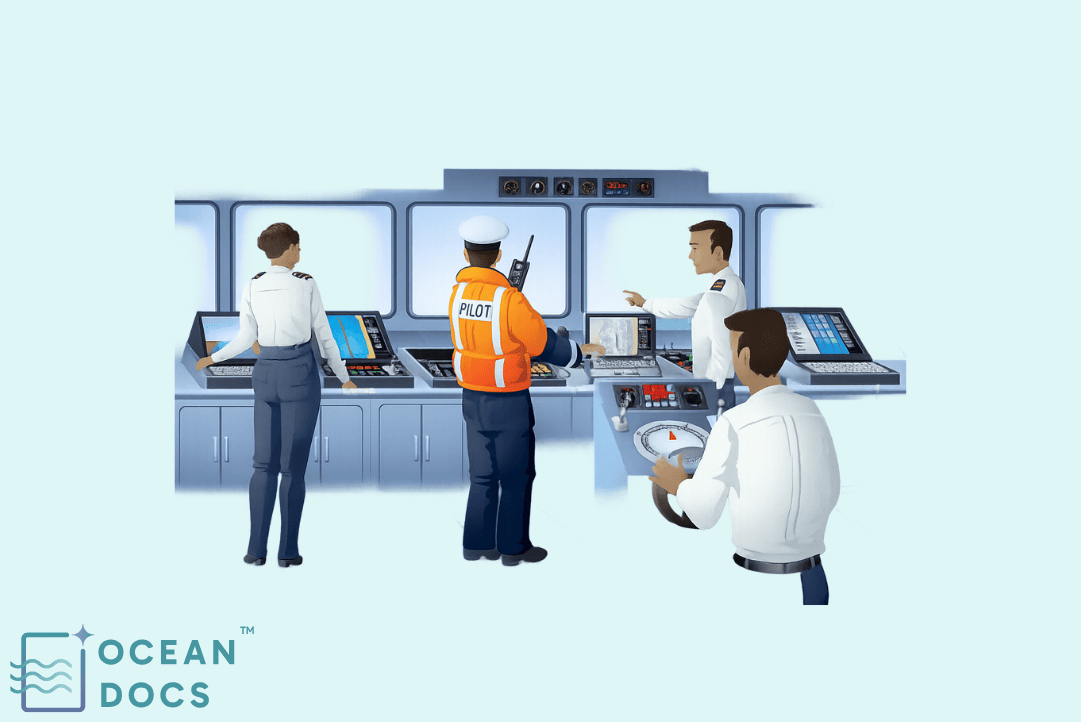
Instant access to accurate information shapes safe and smooth maritime operations. In a busy wheelhouse, crews cannot lose time searching through binders or scattered PDFs. A chief officer facing a port state control team needs the right shipping documents in seconds, not minutes. Instant search tools supported by document intelligence improve safety, compliance, and efficiency across the vessel.
This guide explains why fast access to ship documents matters, how AI document intelligence helps, and why modern maritime compliance software has become essential for daily work at sea.
The Hidden Weight of Shipping Documentation
Modern vessels carry thousands of pages of shipping documentation. Every update to MARPOL, SOLAS, the ISM Code, or the ISPS Code adds new manuals, circulars, checklists, and certificates. Many exist as scanned PDFs. Some live in binders. Some sit in shared drives. Versions often differ across locations.
During a vetting inspection preparation, officers search for the latest procedures, HSEQ forms, risk assessments, and technical files. Without instant search, they rely on memory and bookmarks. This slows operations and creates risk for maritime compliance.
Why Crews Need Instant Search Across Maritime Manuals
Daily work at sea brings constant questions. Officers must confirm what SOLAS maritime rules say about a drill. Engineers must check what MARPOL regulations require for a discharge. Cargo teams must know the correct SOLAS definition for a piece of equipment or what ISM Code guidance applies to a work process.
When answers are difficult to find, delays and guesswork follow.
Instant search across maritime documentation gives officers one place to query all manuals. They can type “hot work permit,” “sire inspection checklist,” or “psc inspection firefighting” and see every relevant page in seconds. This reduces stress and supports safer vessel safety practices.
Making Sense of Key Maritime Rules in Seconds
Many seafarers still look up simple but important questions during drills and training, such as:
-
what is SOLAS
-
what is MARPOL
-
SOLAS meaning
-
MARPOL meaning
-
MARPOL stands for International Convention for the Prevention of Pollution from Ships
Instant search helps them move from confusion to clarity. A strong tool shows both the short explanation and the official text of the regulations. This supports quick guidance and deeper learning.
From Paper Chaos to Maritime Compliance Software
Shipping companies now depend on maritime compliance software to manage documents. Instead of scattered PDFs, all shipping compliance content stays in one controlled library. Version control improves. Audit trails stay complete and clean.
Software that supports ISM compliance and international safety management can link procedures to relevant regulations. When officers search across ISM maritime manuals, they find the company procedure and the legal reference that supports it. This helps crews apply rules correctly in real operations.
How Document Intelligence Helps Crews Work Smarter
Simple keyword search no longer meets modern needs. AI document intelligence understands context within complex maritime texts. It knows that “lifejacket,” “personal flotation device,” and “PFD” refer to the same SOLAS requirement.
With document intelligence:
-
A search for “enclosed space entry” shows HSEQ procedures, checklists, work permits, and training content in one place.
-
A search for “garbage record book MARPOL” surfaces the correct MARPOL Annex and company guidance.
-
Old versus new procedures become easy to compare.
This saves time and reduces the chance of using outdated information.
AI in Maritime: From Data to Action
AI in maritime already supports route planning, fuel efficiency, maintenance, and performance monitoring. The same approach now applies to shipping documents.
AI-powered maritime operations solutions help crews ask natural questions such as:
-
What are the ISPS Code requirements for access control?
-
Which MARPOL Annex applies to garbage management?
-
What is ISM Code guidance for a specific operation?
The AI then shows a clear answer along with the exact page from the manual. This builds confidence during a sire vetting or PSC inspection, because officers can show proof instantly.
Better Vetting and Inspections With Faster Answers
Inspections continue to grow in depth and detail. Sire vetting now requires stronger evidence of understanding. SIRE 2.0 pushes crews to show how well they know their procedures.
Instant search helps crews prepare with targeted information packs. Officers can group relevant sections on safety systems, environmental rules, cargo operations, and risk control. During vetting inspection preparation or live PSC inspection checks, they can answer questions quickly and show the exact MARPOL, SOLAS, or ISM Code clauses that support their decisions.
Building a Culture of Safe, Informed Operations
When information is difficult to find, crews rely on memory. That works until rules change or new IMO MARPOL or SOLAS amendments arrive. Easy access to accurate manuals supports a stronger safety culture.
Searchable ship documents also help new officers learn faster. They can study topics like international safety management, SOLAS maritime fire protection, or MARPOL regulations without depending on others. This develops a confident and informed team that treats documentation as an active tool for safety.
Conclusion
Shipping documents now sit at the center of vessel safety, inspection readiness, and maritime compliance. Crews who can search across manuals, circulars, and procedures in seconds react faster, avoid mistakes, and stay aligned with MARPOL, SOLAS, the ISM Code, the ISPS Code, and HSEQ requirements.
AI document intelligence and modern maritime compliance software transform complex maritime documentation into a simple, searchable knowledge base. As inspections like sire vetting, SIRE 2.0, and PSC inspection regimes become more demanding, instant access to accurate information will define successful operators.
OceanDocs AI provides the maritime AI and AI-powered maritime operations solutions that help crews search, understand, and apply the rules that protect people, cargo, and the ocean.